Posts

White Bunches

Image
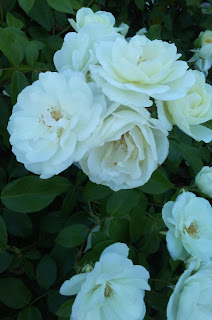
This is a picture of some flowers. I took this at a rose garden in southern California. The garden was really big, but even more beautiful. White Bunches  by Bhargavi Gulia Composition: The first rule I followed in taking this photo was the Rule of Thirds. The main bunch of flowers is towards the top instead of being in the center. Next, I tried keeping a dark background so the white flowers stick out more through contrast. Finally, I made sure that the flowers towards the bottom right were showing at least 60% of what was seen in the main bunch so they do not look like obstacles, but rather side subjects.

Painted Sky

Image
I took this photo while on a road trip. My family stopped at a gas station when I saw the sky and pulled out my camera. The sky in this photo looks more like a painting than a photo. Painted Sky  by Bhargavi Gulia Composition: The main composition to follow is the lighting, which would be set by the exposure and aperture. Change this according to the environment and the mood of your photo. Also, make sure anything that may be an obstacle is either completely cut out, or included by at least 60-70%. By this, I mean show at least 60-70% of the object posing as an obstacle. In this photo, that would be the tree. Instead of only showing the top or the entire tree, I showed about 70% of it. I don't know if there is a rule like this, but I do use this often as it makes the photo more appealing to view.

Hidden Gold

Image
This is a picture of a butterfly that I found roaming around in my backyard. I like this butterfly because it is yellow and yellow is my favorite color. Hidden Gold  by Bhargavi Gulia Composition: As with most nature photography, the photographer is not extremely concerned with composition as much as they are trying to take the photo. Similarly, I was just taking a bunch of clicks in hope to get a good photo. However, I did keep some things in mind when taking this photo. For example, I was trying to stand at an angle where the shadow of the camera does not fall on the butterfly to preserve its naturalness and beauty. Next, I was trying to be at a angle in which the whole butterfly could be captured instead of just its side or the top of its body.

Electric Currents

Image
This photo was taken using my phone during a trip to the pool (before the pandemic). I like this photo because it shows that something as simply as water can be made into intricate things given that you have the right vision. Plus, it reminds me how fun pools are. Electric Currents  by Bhargavi Gulia Composition: This photo is actually a very simple one to replicate. Set your aperture to the desired setting (changes depending on time of day, shade, angle, etc.). Then just move the water and click your shots. There is no real composition technique involved in taking photos like this.

Winter Wonderland

Image
I know. Winter photos in April? This photo came up in the "memories" on my phone. This photo was taken on our way back from Las Vegas. I remember on our way back, it snowed heavily. Where I live, snow is not something we see. Ever. But this was one of those "once in a blue moon" thing where we got to see and drive through snow Winter Wonderland  by Bhargavi Gulia Composition: One thing to note in this photo is that the wind mills are all to the left, following the Rule of Thirds. Another thing is that almost everything is white (except the bushes and the center of the wind mills). Other than placement of the camera. there really isn't any specific composition to the photo.

Colorado River

Image
This is a picture taken from the Hoover Dam. In 2019, my family took a road trip to Las Vegas. It has always been in my travel wish-list to visit the Hoover Dam. Fun fact: the Hoover Dam's construction started in 1931 and was finished in 1933. Colorado River  by Bhargavi Gulia Composition: This photo was taken from the Hoover Dam. The surrounding mountains wrap the Colorado River, making it look like the river is a pathway. The mountains cave in around the left of the photo, where the river starts to bend and get out of sight. This leads the eye to that part of the photograph. One thing I like about this photo is the separation of the blues. There is a blue sky and a blue river. But they are divided by the brown mountains. Something to focus on while taking nature photographs is the horizon line. The horizon line should be at zero degrees, so parallel with the actual horizon as well as the frame of the photograph. This makes the photo more realistic and visually appealing.

Pink and Orange

Image
This is a picture of a butterfly I found flying around in my backyard. After patiently waiting for it to sit on a flower, I was finally able to take some photos of it. Pink & Orange  by Bhargavi Gulia Composition: When looking at this photo, the first thing the viewer notices is the blurred background and the popping subject. This affect can be created by altering the aperture of the camera. Another reason the viewer goes straight to the butterfly is due to contrast. However, this isn't always in your control, especially if you are doing nature photography. Finally, this photo looks more natural because the butterfly is to the left of the frame instead of the center.

Above Us

Image
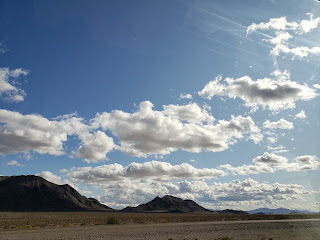
This photo was taken while on a road trip. It was more of an accidental shot as it was taken while I was in a moving vehicle, but I think it still turned out pretty cool. Above Us  by Bhargavi Gulia Composition: Like I mentioned above, this photo was taken in a moving car. Because of this, I wasn't able to really concentrate on using composition techniques. However, the photo turned out perfect in terms of the Rule of Thirds: the mountains are all spread out instead of being in the center. The clouds also outline the mountains, which makes the photo more fun to see.

Waves

Image
This photo was taken while on a trip to the beach (before the pandemic). I find this photo somewhat funny because it looks like the waves are imitating the mountains in the background. Waves  by Bhargavi Gulia Composition: Sometimes, having a slanted horizon makes the photo look better. In this photograph, the camera is just slightly tilted. This tilt makes the waves look just a little bigger, which makes them more dramatic. Now in this photo, there is no line that directs the eye to a specific part. Each subject that can create this line points to a different direction. This maintains the photo's naturalness.

Bubbly

Image
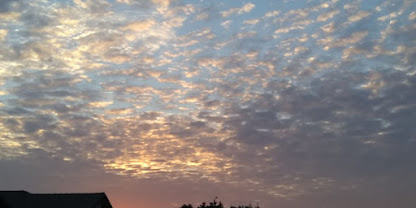
I've always found clouds fascinating. The formations they can take are very cool. I like to sometimes just sit down and stare up at the sky and imagine characters for stories made entirely from clouds! The clouds in this specific photograph look like bubbles to me. Bubbly  by Bhargavi Gulia Composition: This photograph features clouds that look like bubbles. The first thing a viewer sees is the area with the golden clouds. Because this is where the eye first goes, it is important that this isn't in the center of the photograph. For an appealing photo, the subjects should follow the Rule of Thirds. The next thing a viewer sees is the color contrast between the clouds. However, there is one drawback to this photograph. The bottom includes the roof of a house and some treetops. Although these authenticate the naturalness of this photo, it seems like they are obstacles because they are too hidden to be subjects. 

Beyond the Valley

Image
Last weekend, my family went on a little road trip to northern California. On our way back, we took highway 198 to  Coalinga. It was a beautiful sight to see the green mountains through the curvy roads. Beyond the Valley  by Bhargavi Gulia Composition: The first aspect that makes this photo more appealing is that the mountains touch both sides of the frame. The next factor is the level of the camera in comparison to the scene/subject. The camera is at eye-level of a person. This makes the photo more relatable to the viewer. Another key factor is the horizon line. The base of mountains are usually flat, regardless of the structure of the mountain. To imitate this, the horizon line has to be straight across. If it was diagonal, the photo would not be appealing, nor authentic. The final factor that makes nature and scenic photography appealing is depth. Though the subjects of this photo are more blended, depth is still visible due to the cows.

Perched Bird

Image
I am very fond of feeding birds. I always have filled birds-feeders in my backyard, which invites a lot of different types of birds. This one was a new one that was overlooking my backyard. I had my camera at the right time, capturing this beautiful brown-and-white bird on the branch of a tree. Perched Bird  by Bhargavi Gulia Composition: These types of photos are more instantaneous, so many of the composition rules are broken, or not followed fully. For example, the Rule of Thirds was followed for the bird, but not necessarily the branch. Another feature to note is that everything is pointing to the bottom left.

Mixed View

Image
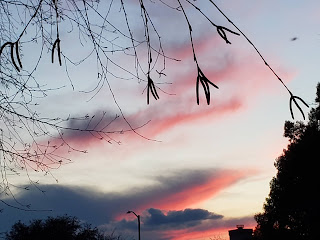
This photo is one of my favorites. It shows that there's always light at the end of the tunnel. An maybe even "don't judge a book by it's cover". Looking at the clouds on the top, it appears that the weather looks stormy, but as you view the rest of the photo, it becomes nice and bright, suggesting good weather, or good weather after a storm. Mixed View  by Bhargavi Gulia Composition: The clouds are more to the right while the tree-tops touch the left side of the frame. The clouds on the bottom outline the trees. There is a sandwich of contrast in this photo. The upper part of the photo is dark; the center of light and bright; and the bottom is a mix with the trees being dark, but the sky behind them being light.

UFOs

Image
The clouds in this photo reminds me of UFOs because of their shape. This photo almost appear comical to me because it looks like the branches of the tree are trying to grab the UFOs. UFOs  by Bhargavi Gulia Composition: The Rule of Thirds was broken here, as the clouds are in the center of the photo. However, because of the slant of the clouds and their shape, it carries out to other parts of the frame. Additionally, the branches touch both sides of the frame. Essentially, there is a border of greenery, whether that comes from the branches or the trees. This makes them look like a border instead of an obstacle.

Feathers From the Sun

Image
This photo was taken while I was on a walk with my puppy around my neighborhood. I was just about to start walking when I came across this view. Feathers From the Sun  by Bhargavi Gulia Composition: The cloud in the center of the two clouds creating a straight line in this photo looks like a feather. The straight-line clouds appear to be parallel. They also divide the sky and trees. The source of lighting comes from the sun, which is hidden near the bottom of the trees. The main composition rule I followed here was the Rule of Thirds; nothing is in the center. This also creates asymmetry/

Trucks v Clouds

Image
The title of this photo was inspired by the movie, Ford v Ferrari . It was taken while in a car, so many of the compositions were instantaneous and therefore not actually planned. Trucks v Clouds  by Bhargavi Gulia Composition: This is not what I thought about when taking this photo, but what I analyze about it now. The eye is led to the right because the trucks as well as the clouds create visual lines towards that direction. The position of each truck can also be identified based on how much of each one is seen.

The House Halo

Image
This photo was taken while I was walking around my neighborhood. Though the whole view did not come in the frame, the clouds formed an angel halo over the houses. The House Halo  by Bhargavi Gulia Composition: Though not to it's fullest, the Rule of Thirds was used in that the inner part of the halo is higher than the center line of the photo. The lower part of the halo is made up of darker clouds, which creates a division between the brighter top and the darker bottom.

The Hidden Eye

Image
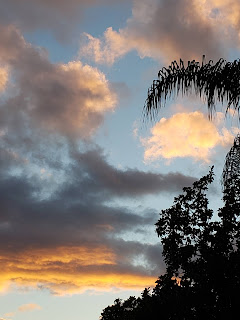
Sometimes, one has to be really creative to take a photograph out of something that looks ordinary. I took this photo with the focus of the leaf from the palm tree over the cloud to make it look like an eye. I think it came out pretty cool! The Hidden Eye  by Bhargavi Gulia Composition: Though this is not fully in my control, the shades of the clouds create contrast. It just so happened that the cloud that acts as a pupil was the only white one, making it stand out. The Rule of Thirds is applied here, as the "eye" is to the side and up, instead of in the center.

Cloudy Delight

Image
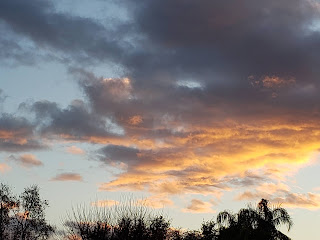
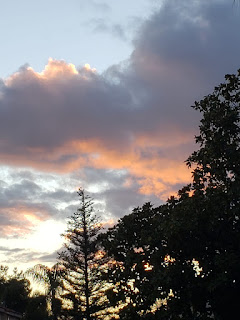
Yesterday, as I was walking my puppy, I stopped to take a look around me. The sky was just mesmerizing. As I was about to turn back, I looked up and was wowed with how the clouds bordered the trees. Cloudy Delight  by Bhargavi Gulia Composition: The first key thing in this photograph is contrast. The upper half, as well as the left, is more cheery and bright, while the lower half along with the right side is darker. The contrast in colors makes this photograph more visually appealing. The next key thing is the outline. The clouds outline the trees, if you look at it with a creative glance. Finally, the use of diversity makes this photograph more appear more natural. There is one tree that is near the center that does not match the rest.

Morning Dew

Image
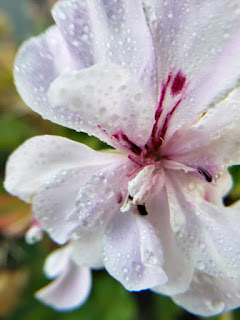
This photo was taken during the summer of 2020 in my backyard. I love growing flowers. Watching them bloom is just mesmerizing. Morning Dew  by Bhargavi Gulia Composition: The Rule of Thirds is followed as the flower is to the right and slightly closer to the top. The focus is on the center of the flower, as well as the mist on the flower. The background is blurred, so you can just see green and yellow leaves merged together with lower visibility. This makes the subject, in this case the flower, stick out more. Additionally, the bright white flower with pink contrasts the darker green background.